
Makeup first. Work when needed.
Explore a makeup-focused dressing table in two use states: preparation in progress and reset for occasional laptop use.
About this study: A hypothetical design study with AI-generated concept illustrations, not a completed customer project. The layouts are design proposals rather than product specifications.
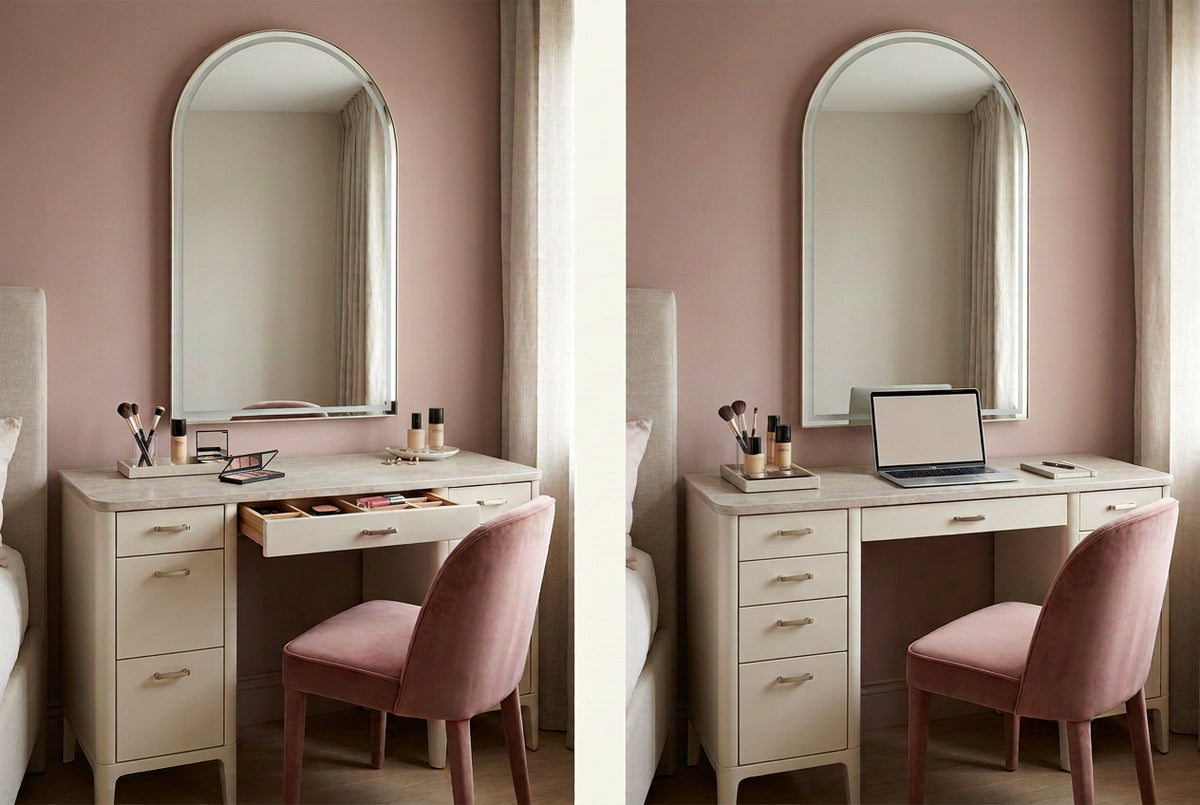
Design the change of use, not just the furniture
Left: makeup preparation. Cosmetic items remain accessible and the shallow organizer drawer is open.
Right: occasional laptop use. The drawer is closed, cosmetics are gathered on a tray and the central surface accommodates a laptop and notebook.
The wall-mounted mirror stays in place. The change of use depends on moving and storing everyday objects, not on a folding mirror mechanism.
Ready for the makeup routine
Explore: the sequence of preparation and the items that need to remain within reach.
Review: mirror position, cosmetic dimensions, control access and open-drawer clearance.
Trade-off: accessible objects and an open drawer occupy space; check them against the seated routine.
Reset for occasional laptop use
Explore: a brief secondary activity after cosmetics are gathered or stored.
Review: laptop footprint, tray destination, screen position and device-access requirements.
Trade-off: laptop use introduces screen, seating and access requirements that need review in the actual arrangement.
Give every moved object a destination
Plan both transitions: where do makeup items go when the laptop appears, and where do the device and accessories go when preparation resumes?
If switching repeatedly displaces essential items or requires a permanent equipment setup, reconsider whether one arrangement should serve both tasks.
Three relationships to review
Objects & destinations
Compare cosmetics, trays and device dimensions with the proposed storage and worktop. Give each moved item an accessible destination in both use states.
Mirror, screen & light
Review mirror and screen positions, lighting-control requirements and current product information against the intended room conditions.
Seat, drawer & access
Check furniture dimensions, chair movement, drawer travel and approach routes. Assess the expected duration and type of secondary use as part of the brief.
Questions to shape a dual-purpose brief
What should we plan before adding laptop use?
Define the makeup routine first, then identify the device, accessories and expected frequency of secondary use. Assign a destination to everything that moves.
Does the mirror need to disappear?
Not in this concept. It remains wall-mounted, so review its relationship with the screen, seating position and room lighting.
When would a separate workspace be more appropriate?
If the brief involves long work sessions, permanent equipment or frequent disruption to the preparation routine, assess a separate arrangement rather than assuming one table should do both jobs.
Develop a makeup-first furniture brief
Share the primary routine, secondary activity, intended users and space or furniture reference. Include the types of objects and devices involved, target market and timing if known.
Mention this study title in your message; preferences are not transferred automatically.
Explore Dressing-Space Lighting
Discuss a Dual-Purpose Dressing Space